
Robot Lawn Mowers for Narrow Passages and Tight Gardens
A narrow passage is more than a gap the mower can physically enter. The machine must also navigate the approach, turn without becoming trapped, maintain a reliable route and return to its charger. Here is how to assess those constraints before choosing a model.
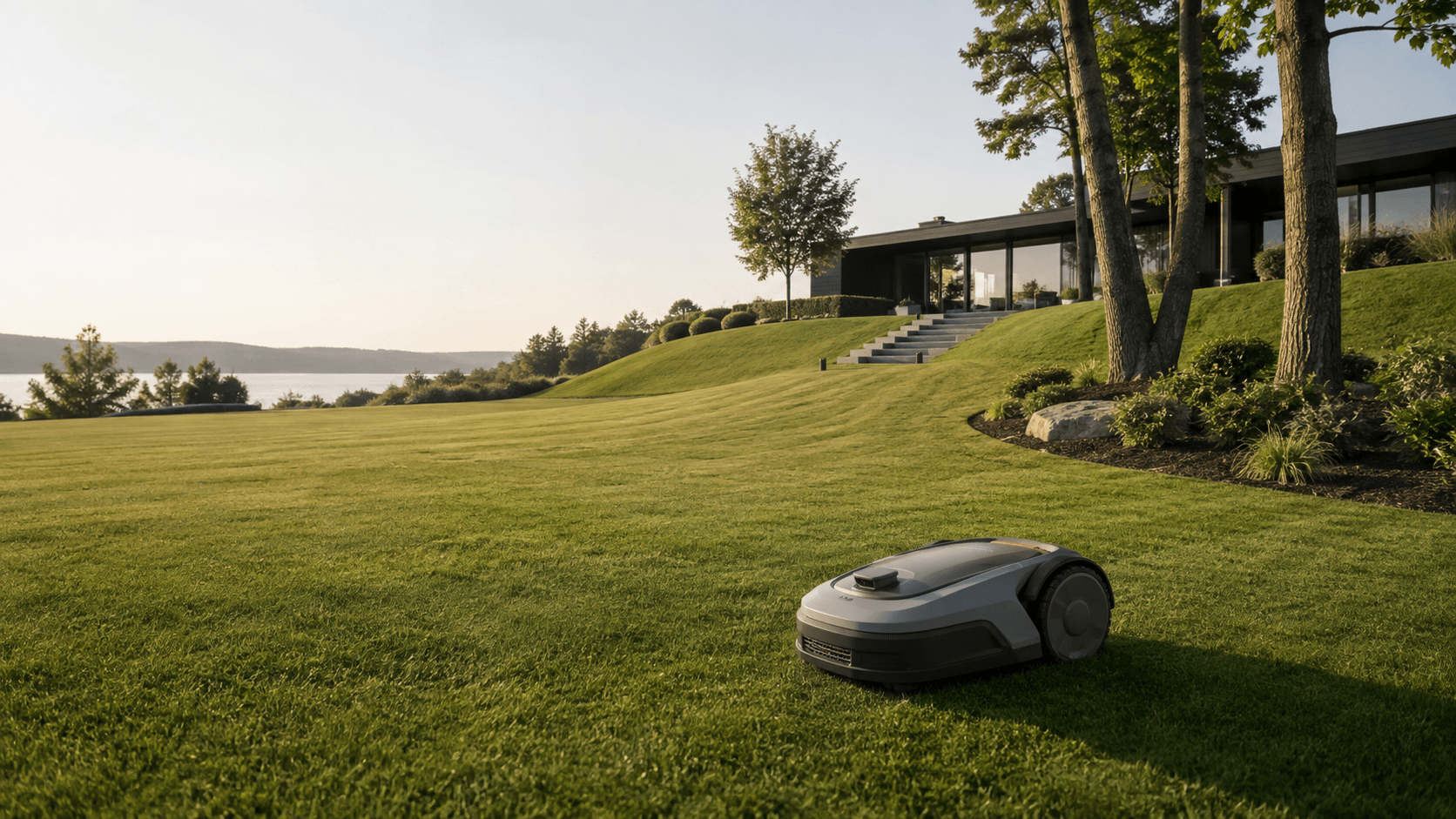
Robot Lawn Mowers for Narrow Passages and Tight Gardens
The right robot mower for a narrow passage needs adequate body clearance, dependable navigation and enough room to approach and exit the corridor—not simply a cutting deck that appears narrow.
Measure the tightest point at ground level and check for edging, roots, walls, overhanging plants and sharp turns that reduce usable space.
If two lawn areas are connected by an unreliable corridor, treating them as separate zones may be more practical than expecting the mower to travel between them automatically.
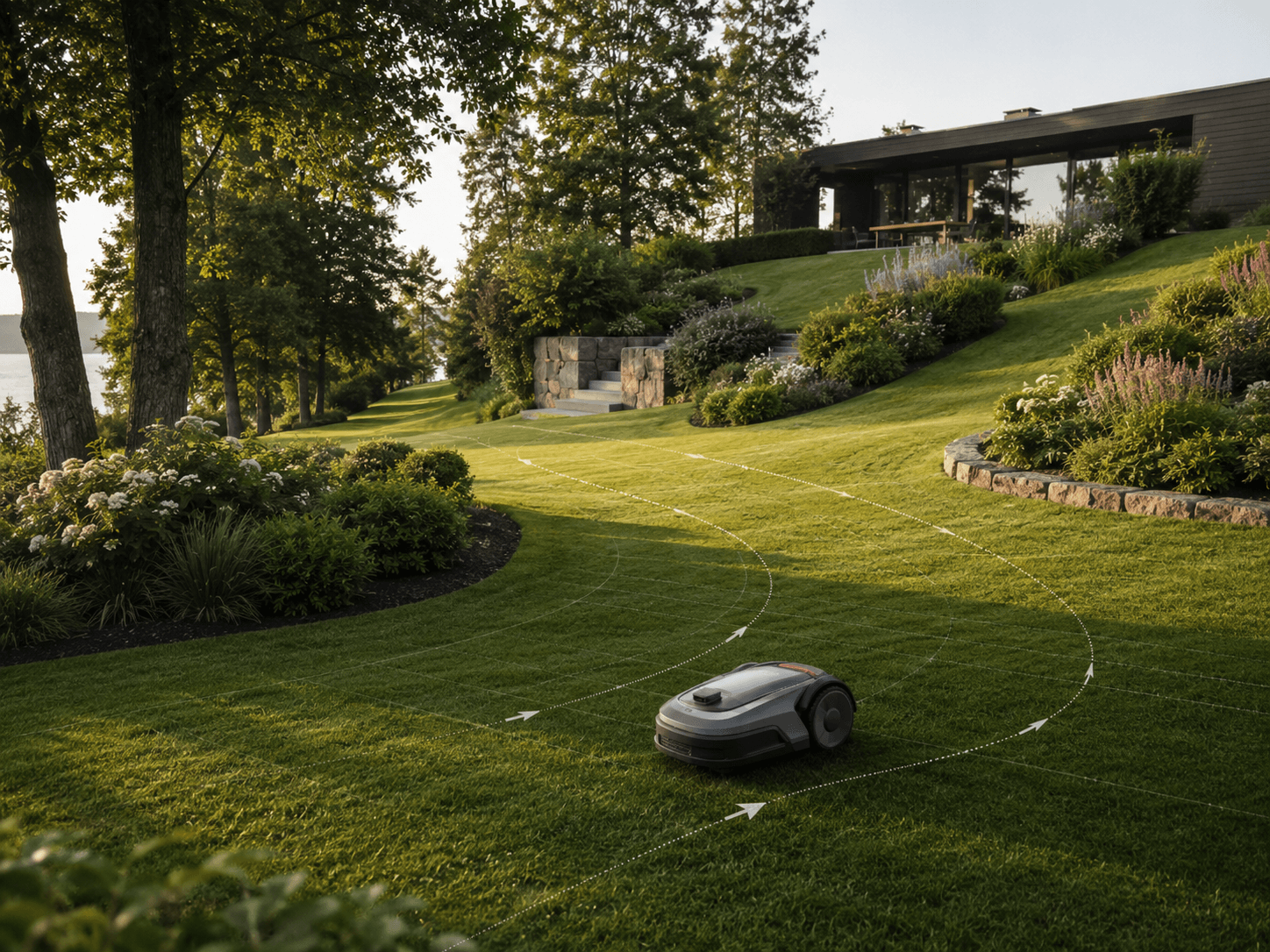
Measure the usable route, not just the visible gap
Measure the narrowest point along the entire route, including the entrance and exit. A passage may look generous in the middle but become unusable where a wall, raised border or planting bed pinches the approach. Check clearance close to the ground, where the mower’s body and wheels travel.
Also examine the shape of the route. A straight corridor is generally easier than a narrow opening followed immediately by a corner. The mower may need lateral space to correct its heading, especially if it enters at an angle. Soft soil, exposed roots and sloping edges can further reduce the practical width.
Manufacturer cutting width is not the same as overall mower width. Use the published chassis dimensions when checking physical fit, and leave a margin rather than designing around an exact theoretical clearance.
- Measure at several points and in both travel directions.
- Include edging, wall projections, roots and seasonal plant growth.
- Check whether the mower can turn before and after the passage.
- Inspect the route in wet conditions for rutting or wheel slip.
Decide whether the passage should connect mowing zones
A corridor does not have to function as mowing space. In some gardens, its main purpose is to let the mower move between larger lawn sections. The route must still be recognized, remain unobstructed and provide a dependable return path.
If the connection includes steps, gravel, a gate, public paving or a gap that is simply too tight, separate-zone operation may be safer. Some mowers can follow designated transport paths, while others require manual carrying between disconnected areas. That distinction matters if you expect fully automatic coverage.
Map every lawn section before buying. Note which areas are physically connected, which require transport and where the charging station can be placed. The broader robot mower lawn-suitability guide can help identify other constraints.
Small layout changes can improve reliability
Minor garden changes can be more effective than choosing a highly complex mower. Trimming back low plants, leveling a sunken edge or relocating a decorative object may create a cleaner route. Avoid abrupt borders that leave one wheel on grass and the other on a hard or sloping surface.
Observe the corridor during initial mapping and early mowing cycles. Check entry from both directions, the return journey to the charger and behavior after rain. If the mower repeatedly hesitates or reroutes, widen the usable path where possible or redefine the area as a separate zone.
What matters most
Use the garden’s most restrictive point to decide which features matter. Overall lawn area alone does not reveal whether a mower can handle the layout.
Straight, clear corridor
Prioritize verified body clearance and reliable route mapping. A simpler mower may be sufficient if the approach is open and the surface is level.
Narrow route with trees or walls
Navigation that remains useful around obstructions and shaded areas becomes more relevant. Keep the route clear so obstacle avoidance does not interpret temporary clutter as a blocked corridor.
Tight passage on uneven ground
Traction and terrain capability matter alongside width. Check for cross-slopes, loose soil and raised edging rather than relying only on the mower’s headline slope rating.
Physically disconnected lawn sections
Look closely at multi-zone behavior and transport requirements. Manual carrying may be acceptable for occasional mowing, while a compatible transport path is preferable for greater automation.

Models worth considering
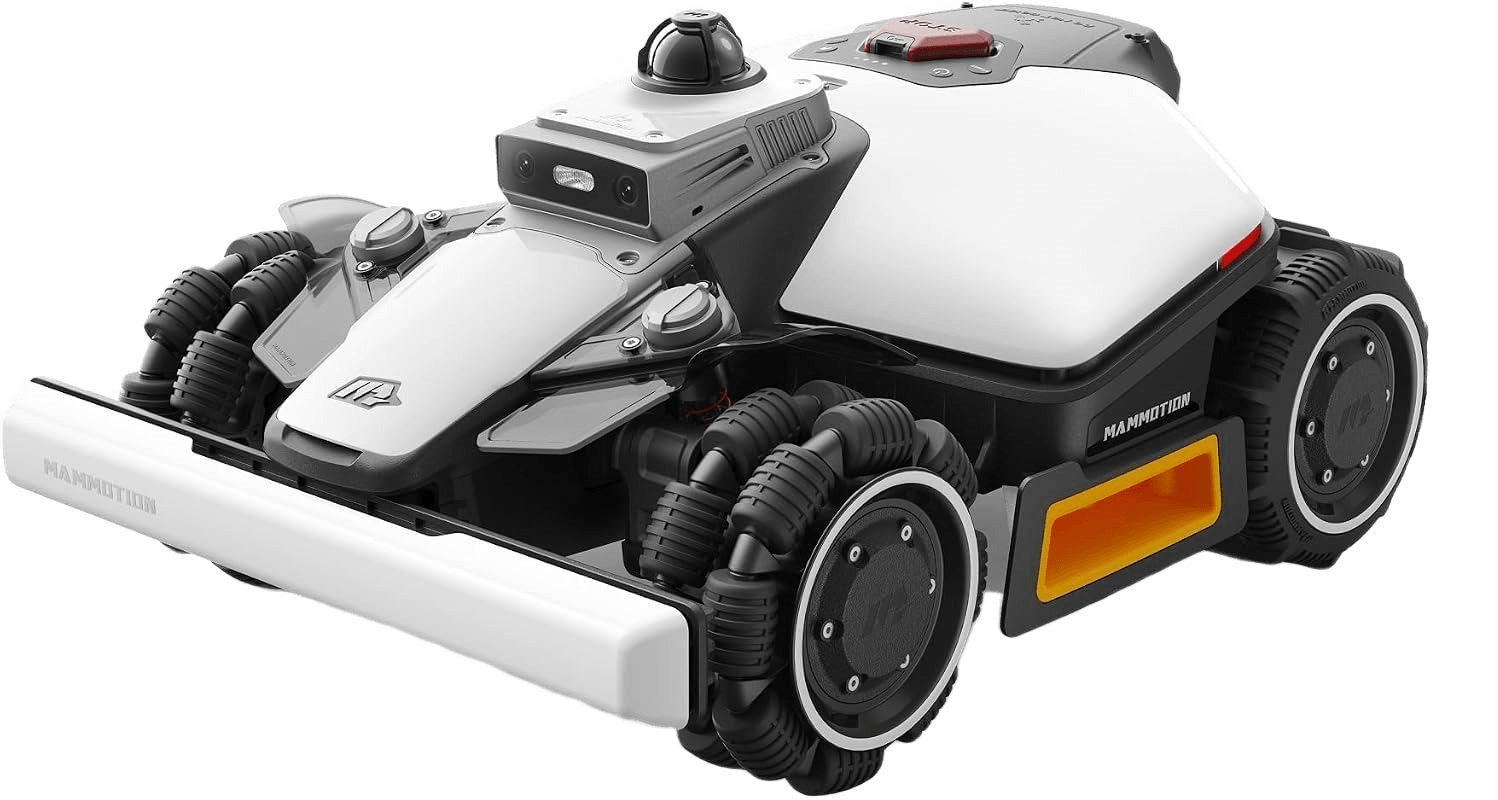
Mammotion LUBA mini 2 AWD 1500
A compact all-wheel-drive model using LiDAR and vision navigation, with systematic mowing and strong obstacle handling.
Best for: Lawns with narrow connecting routes, uneven terrain, tree cover or several mapped areas linked by transport paths.
Consider: Confirm full chassis clearance and the cellular subscription requirement before deciding. Advanced navigation cannot compensate for a physically undersized opening.
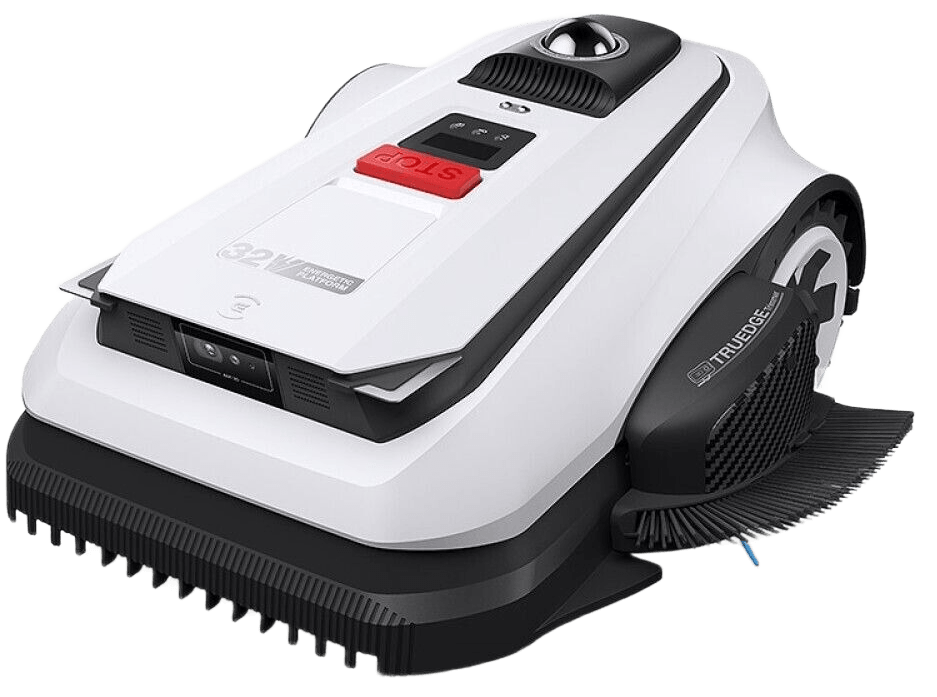
ECOVACS GOAT A3000 LiDAR PRO
A wire-free model combining LiDAR and vision navigation with systematic mowing, strong obstacle handling and integrated edge trimming.
Best for: Larger, complex or shaded gardens where broad mowing coverage and object detection matter alongside passage navigation.
Consider: Verify the mower’s complete physical dimensions at every bottleneck. Disconnected zones require manual carrying rather than automatic travel between them.
FAQ
Can any robot lawn mower pass through a narrow corridor?
No. Compatibility depends on the mower’s full body dimensions, the manufacturer’s corridor requirements, the shape of the approach and the available turning space. Navigation quality does not override physical clearance.
Is cutting width the same as mower width?
No. Cutting width describes the cutting system, not the widest part of the machine. Use published overall dimensions when measuring a passage.
Can a robot mower cross a path between two lawns?
Potentially, if the model supports an appropriate route and the surface, boundaries and surroundings meet its setup requirements. Otherwise, the lawns may need to be configured as separated zones with manual transport.
Are wire-free mowers better for tight gardens?
They can make boundaries and corridors easier to adjust, but they are not automatically a better fit. Physical clearance, navigation conditions and model-specific mapping requirements remain decisive.
What if the mower fits but repeatedly gets stuck?
Inspect the approach angle, ground condition, edging and temporary obstacles. Widen or simplify the route where possible. If reliability remains poor, use separate zones rather than forcing automatic passage.
Match the mower to the bottleneck
Record your lawn area, narrowest usable opening, turning space, terrain and zone connections before comparing models. The MowCompass finder can then narrow the field without treating lawn size as the only requirement.
Use the MowCompass mower finder