
Robot Lawn Mower Slope Calculator
Measure the steepest part of your lawn and instantly convert it into slope percentage and degrees. Then compare the result with the slope rating of the robot mower you are considering.
Measure your lawn slope
Enter the vertical rise and horizontal run of the steepest section the mower will actually need to cut. You can mix units — the calculator converts them automatically.
Measure the steepest relevant section. The average slope of the garden is less useful if the mower still has to climb one much steeper bank.
How does the robot lawn mower slope calculator work?
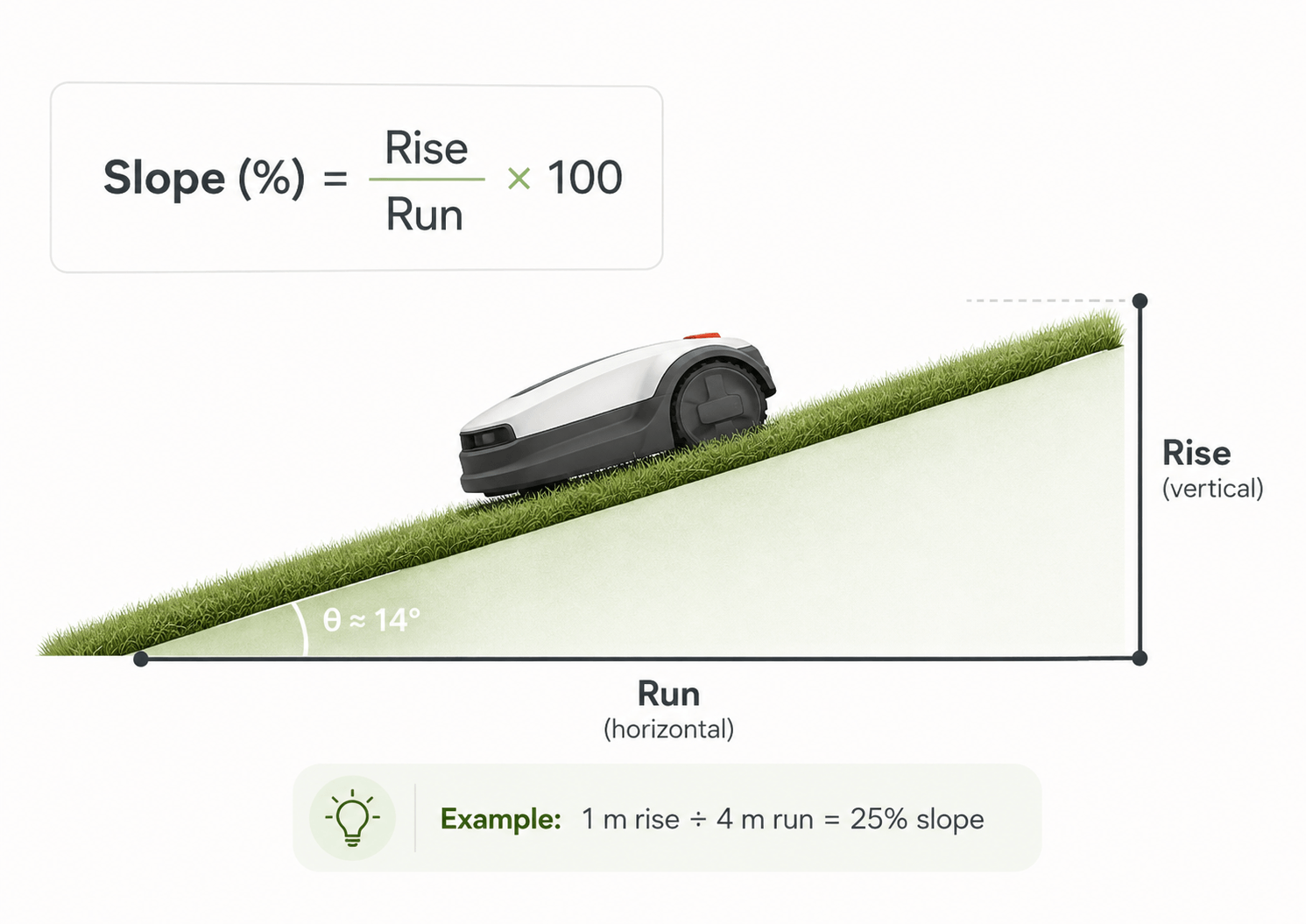
Lawn slope is normally described using either a percentage or an angle in degrees. The percentage tells you how much the ground rises vertically compared with the horizontal distance travelled.
The formula is simple: slope percentage = rise ÷ run × 100. A lawn that rises 25 cm over a horizontal distance of 100 cm therefore has a 25% slope.
This matters when choosing a robot mower because manufacturers specify a maximum gradient their machines are designed to handle. The robot lawn mower slope calculator lets you turn a real measurement from your garden into the same type of number you will see on a mower specification sheet.
A 25% gradient is approximately 14°. Percentage and degrees describe the same slope in different ways, but the numbers are not interchangeable.
How to measure lawn slope in three steps
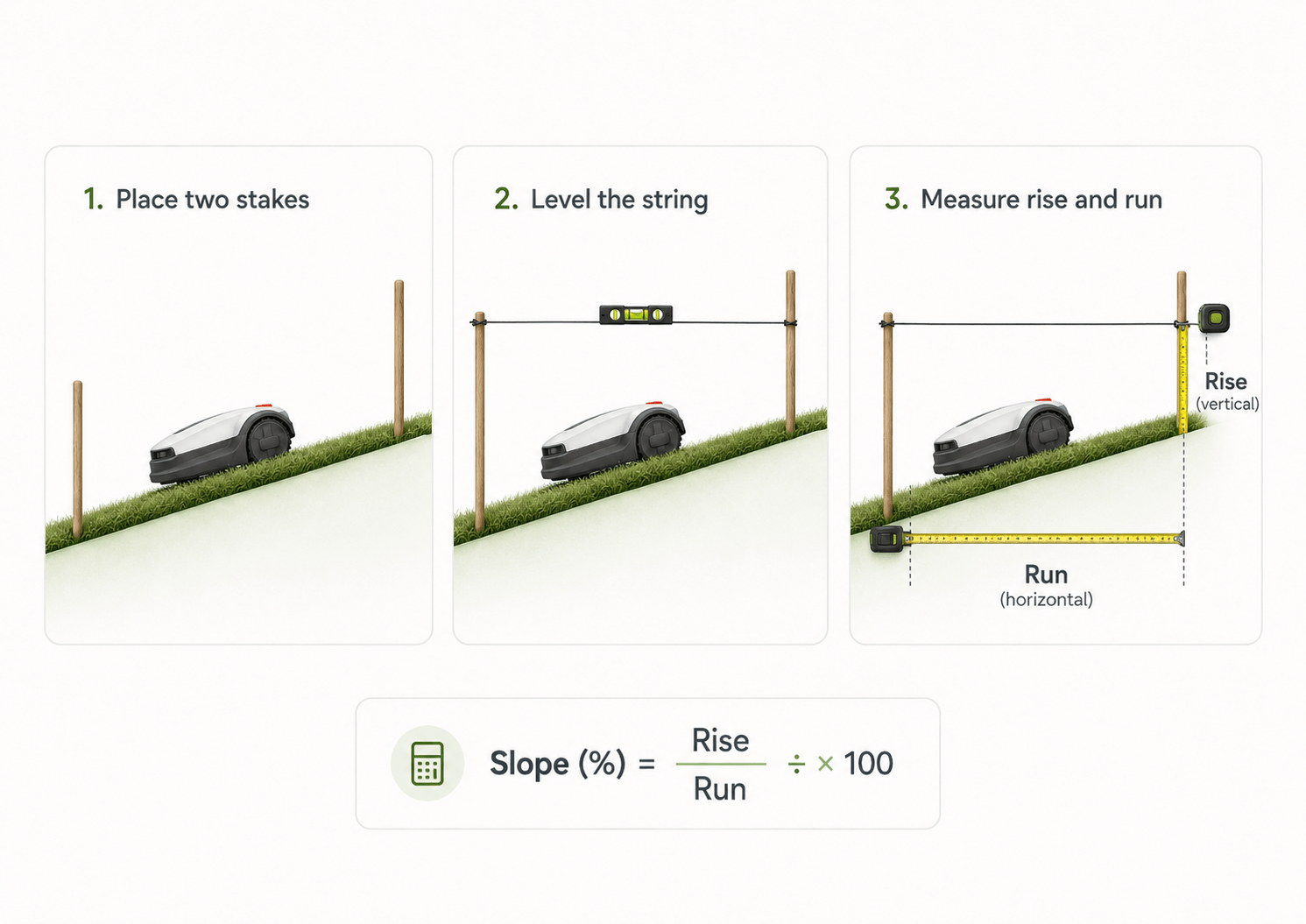
You do not need specialist surveying equipment. A tape measure, two stakes, some string and a small spirit level are enough for a useful home measurement.
Mark the slope
Place one stake near the bottom and one farther up the slope. Measure a section that represents the steepest area the robot mower needs to use.
Make the string level
Stretch string between the stakes and use a spirit level to make the string horizontal. The string now represents your horizontal run.
Measure the rise
Measure vertically from the ground at the upper end to the level string. This vertical distance is the rise.
Calculate the gradient
Enter the rise and horizontal run in the robot lawn mower slope calculator above. It will return both percentage and degrees.
A rolling lawn can contain short banks that are much steeper than the rest of the garden. Use the highest relevant result when comparing robot mower specifications.
Robot mower slope percentage vs degrees
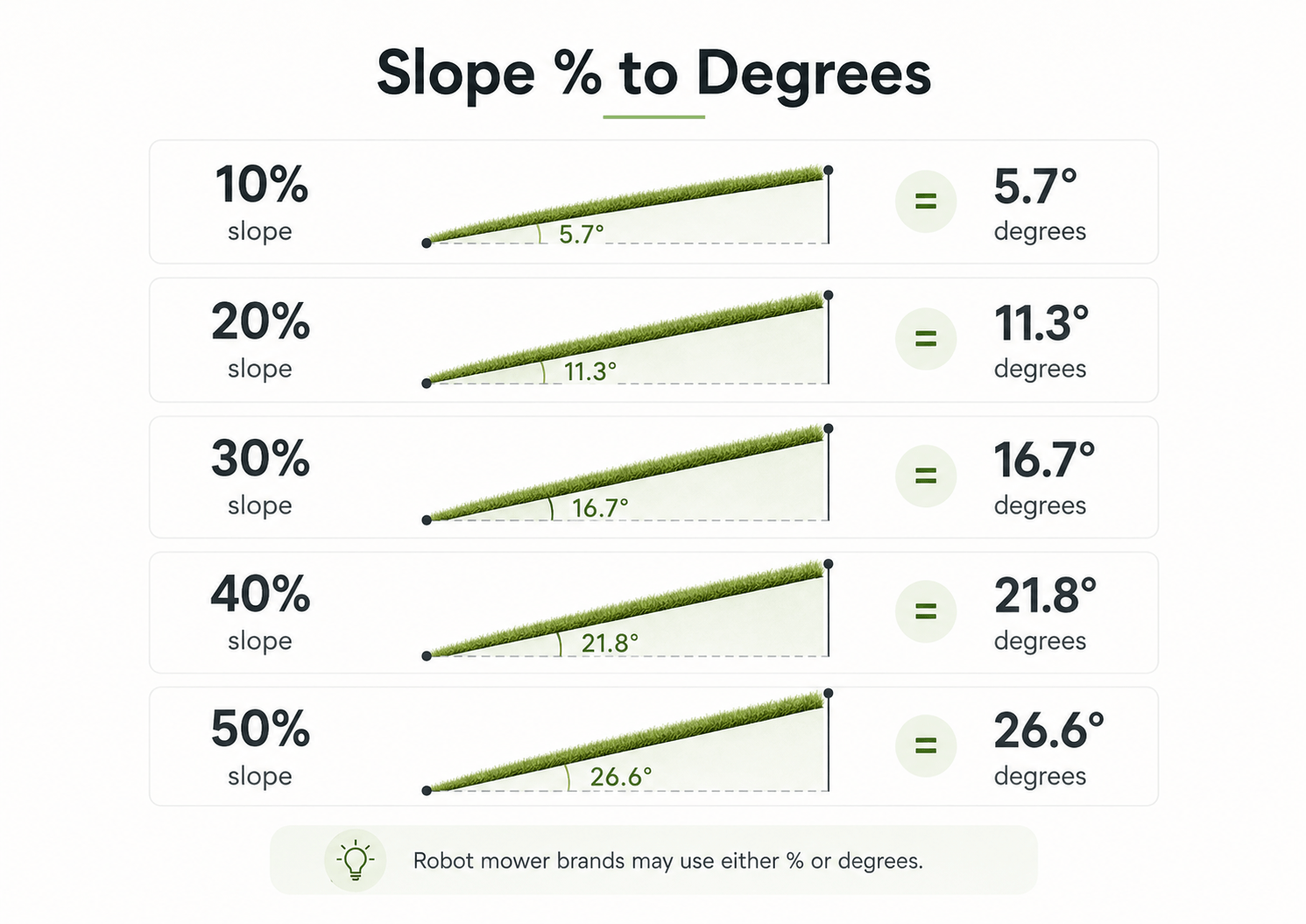
Robot mower manufacturers may describe maximum gradient using percentages, degrees or both. These values look very different even when they describe exactly the same hill.
The easiest approach is to measure your lawn once and let the robot lawn mower slope calculator display both values. You can then compare whichever measurement the manufacturer uses.
What slope can a robot lawn mower handle?
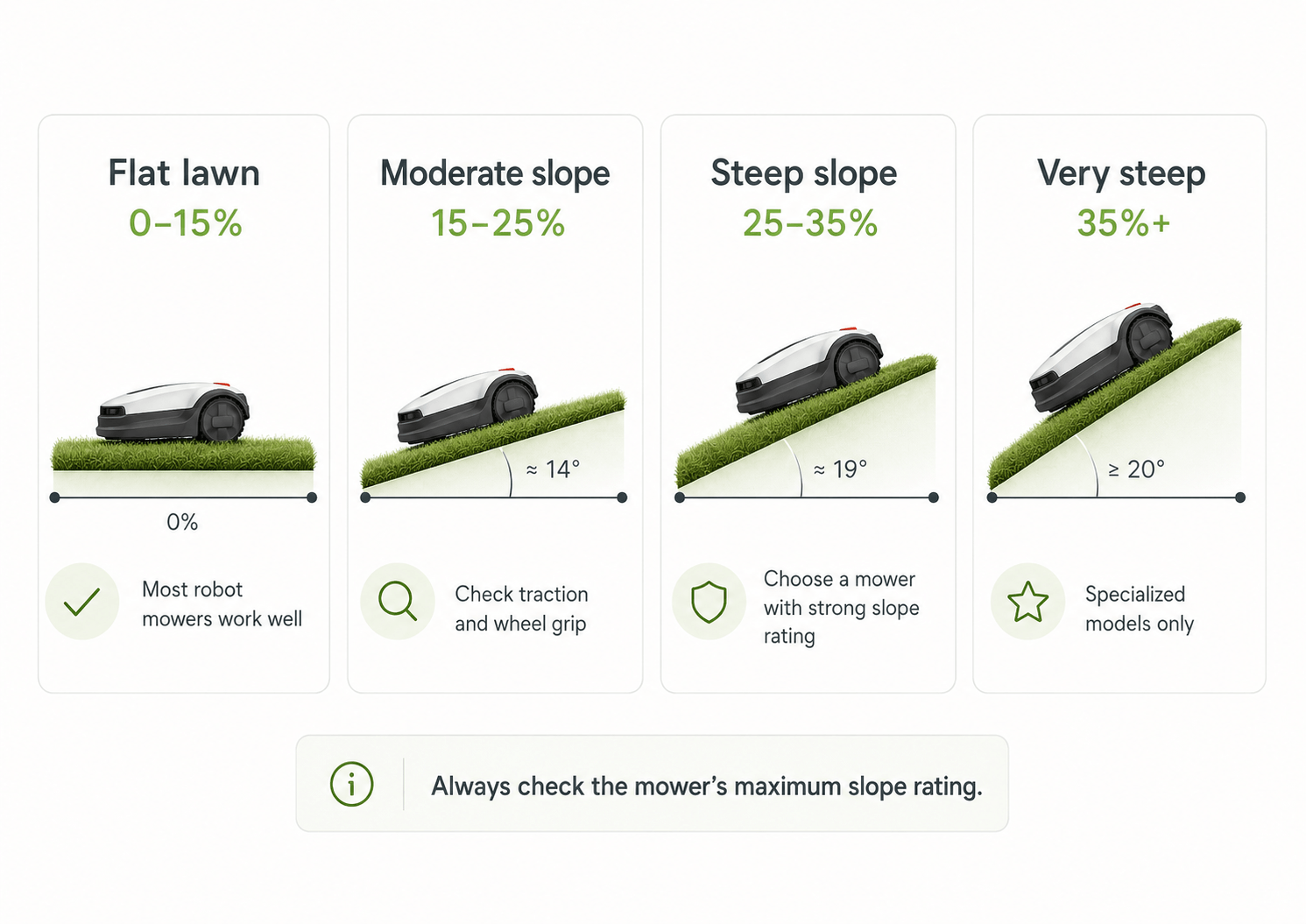
There is no single maximum slope for every robot mower. Capability depends on the drive system, wheel design, weight distribution, software and the conditions the mower is expected to work in.
Basic lawns with gentle gradients give you a much wider choice of machines. As slopes become steeper, traction and the published maximum gradient become increasingly important.
Some manufacturers also specify different limits for normal mowing areas and for slopes close to boundaries. That is why the number produced by a robot lawn mower slope calculator should be treated as a compatibility measurement rather than a guarantee that any mower with the same headline percentage will work perfectly.
If your measured bank is close to a mower's published limit, consider a model with additional slope capability rather than assuming perfect conditions every day.
Why the same slope can be harder on one lawn
Gradient is important, but it is only one part of how demanding a hill is for a robot lawn mower.
Wet or loose ground
Wet grass, soft soil and loose surfaces reduce traction and can make a manageable gradient much more difficult.
Turning on the slope
A mower climbing directly uphill may behave differently from one that needs to turn, stop or travel sideways across the bank.
Obstacles
Trees, beds and other obstacles can force repeated turns on the steepest part of the lawn and increase wheel slip.
Uneven terrain
Holes, roots, bumps and abrupt changes in gradient can matter even when the average slope percentage looks acceptable.
Use your slope measurement to narrow the mower market
Once you know the steepest gradient, use it as a hard requirement rather than choosing a mower first and hoping it can cope. MowCompass is designed around that idea: describe the lawn first, then compare machines that actually fit it.
Robot lawn mower slope calculator FAQ
How do I calculate lawn slope percentage?
Divide the vertical rise by the horizontal run and multiply the result by 100. For example, a 20 cm rise over a 100 cm horizontal run is a 20% slope.
Is a 20% slope the same as 20 degrees?
No. A 20% slope is approximately 11.3°. Percentage and degrees use different scales to describe the same incline.
Should I measure the average or steepest lawn slope?
Measure the steepest section the robot mower actually needs to mow. A short steep bank can determine mower suitability even when most of the garden is almost flat.
Can I use feet and inches in the slope calculator?
Yes. The calculator accepts centimetres, metres, inches and feet. Rise and run can even use different units because they are converted automatically before the calculation.
Should the mower's maximum slope exactly match my lawn?
It is safer to avoid planning around the absolute published maximum. Traction can change with moisture, surface condition, turns and uneven terrain, so extra capability can be useful on a demanding lawn.
Do robot mowers handle slopes near boundaries differently?
Some models publish a lower maximum gradient near the installation boundary than inside the main mowing area. Always check the installation guidance for the exact mower you are considering.
Know the slope. Now find a mower that can handle it.
Use your lawn size, steepest slope, terrain and garden layout to narrow the market to robot mowers that better fit the job.
Find My Robot Mower →